
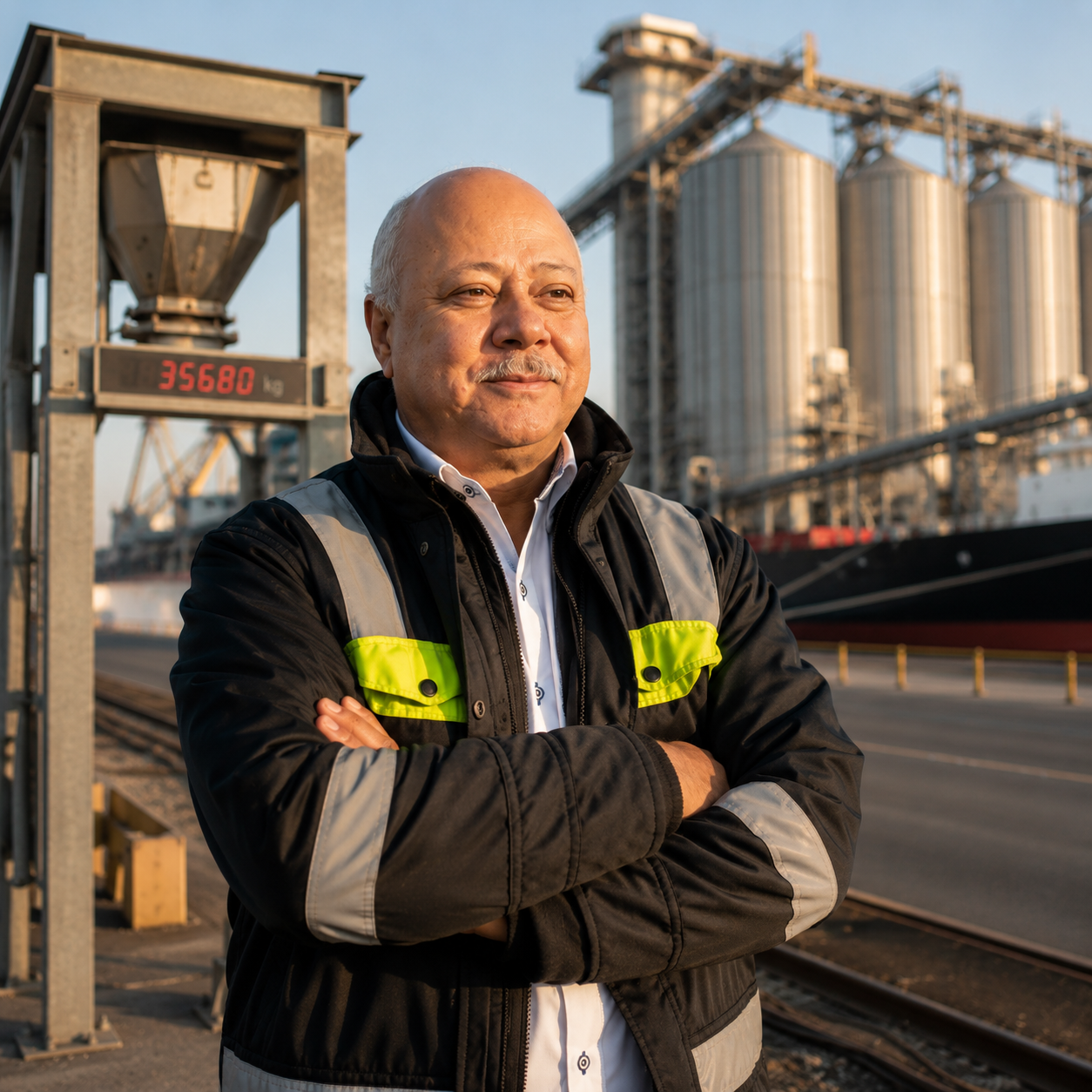
Agri is one of the most traditional markets there is. Albert has watched it closely for more than 40 years.
“Weight determination, quality, and correct sampling as per the applicable contracts. That is our mandate as an inspection company and it was exactly the same fifty years ago.”
So has nothing changed? Not quite. The range of agri products and by-products has widened over the years, even if the products themselves are much the same. What changed most is how we establish the facts.
“The weighing equipment became far more accurate and better operated. It became verifiable. It is no longer a matter of estimation the facts are recorded, registered, certified, and the installations are calibrated.”
Handling has moved on as well. Far fewer parcels are now carried with separations in the same hold, which prevents a great deal of the damage that used to come with it.
Albert added something of his own along the way: he made the layout of the report, and the general observations of what the surveyor actually sees, a standard part of RVJ’s reporting.
“I have never liked holding on to a fixed rhythm, year after year. You have to keep looking for what can be better. The layout should invite the client to read the report.”
That is how progress works in a market like this one. Not in leaps, but in steps and every step has to be earned through consistency and trust.
“It is a traditional market. You build a position steadily, or you don’t build one at all.”